Ghosts on Film: The Shadow Network Keeping Banned and Buried Movies Alive
There's a guy in Ohio — goes by "Splicemaster" in the forums — who spent eleven years tracking down a specific Italian genre film that was never officially released in the US, got pulled from European distribution after a lawsuit in the mid-80s, and exists now in exactly three known physical copies. He found one of them. He's not telling you how.
This is what film preservation looks like when the institutions aren't paying attention.
The Stuff Studios Don't Want You to Find
Hollywood has a complicated relationship with its own catalog. Studios shelve films for a hundred different reasons: rights disputes, talent controversies, embarrassing box office failures, legal landmines buried in music licensing. The result is a staggering number of movies that technically exist but are practically inaccessible to anyone who doesn't already know where to look.
The Library of Congress estimates that roughly 70 percent of all silent films are already gone forever. But the losses didn't stop when talkies arrived. Theatrical cuts get replaced by director's cuts, which replace TV edits, which get superseded by streaming versions that quietly remove scenes nobody bothered to announce were missing. Every format transition — from 35mm to VHS to DVD to digital — is another opportunity for something to fall through the cracks.
The underground collectors aren't waiting for the Criterion Collection to notice.
"Studios treat their libraries like real estate," says a collector who runs a trading operation out of the Pacific Northwest and asked to be identified only as "Marginal Footage." "They hold onto rights they're not using, won't license, won't restore, won't release. Meanwhile the actual film is deteriorating in a warehouse somewhere. We're not stealing anything. We're keeping things alive that would otherwise just rot."
How the Trading Actually Works
It's not eBay. It's not even close to eBay.
The ecosystem runs through private forums, encrypted Discord servers, and long-running email chains that get passed like heirlooms from one trusted member to the next. Access is earned slowly. New participants are vouched for, watched, sometimes tested. The community is small enough that bad actors tend to get identified fast — and exclusion is basically permanent.
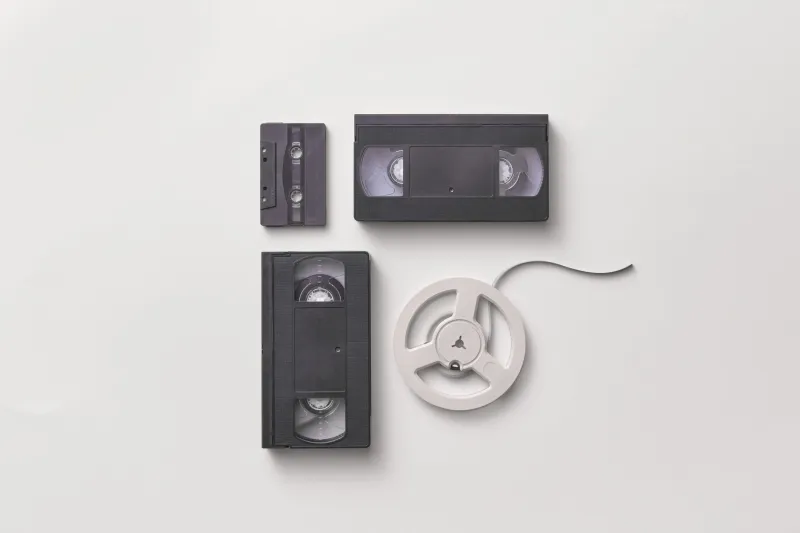
The actual trades are physical as often as they are digital. Burned discs, USB drives, occasionally original VHS tapes wrapped in bubble mailer envelopes, moving through the postal system the same way record collectors have been trading vinyl for decades. Some traders specialize in specific regions — particularly Japanese LaserDisc releases, which frequently contained alternate cuts and bonus footage that never made it to American home video.
Others focus on workprints: early, unfinished versions of films that leaked before post-production was complete. A well-documented workprint of a major studio film from the 90s can circulate for years in these channels, passed hand to hand, accumulating a kind of folklore around itself. People write up comparison notes. Someone edits a document cataloging every scene that got cut before release. The workprint becomes a text, and the text gets annotated.
"There's a workprint of a film I'm not going to name that has an entire subplot that was removed before theatrical release," Marginal Footage says. "It changes the whole ending. The community has basically written a small library of analysis around that subplot. It's film scholarship. It just doesn't have a university letterhead on it."
The Archivist Mindset
What separates the serious collectors from the casual pirates — and they are very clear that this distinction matters — is the documentation.
A dedicated archivist doesn't just hold a copy of something. They know its provenance. They know which generation dub it is, what the original source format was, whether the audio is synced correctly, what the aspect ratio should be. They track down theatrical programs, old newspaper reviews, behind-the-scenes photographs. They build case files.
Splicemaster, the Ohio collector, posts lengthy write-ups on a private forum for every significant find. His entry on the Italian film runs to about 4,000 words and includes scans of two original lobby cards he tracked down separately, a translation of a 1987 Italian film magazine review, and a detailed breakdown of why he believes the existing print is missing approximately six minutes of footage that may no longer exist anywhere.
"I don't think I'll ever find those six minutes," he wrote in the post. "But I want the record to show that they existed. That matters to me."
This is the part that's genuinely hard to dismiss as mere piracy. The major film archives — the Academy Film Archive, UCLA Film & Television Archive, the Museum of Modern Art — do extraordinary work. But their resources are finite, their priorities shaped by institutional interests, and their holdings are not always accessible to the public. The underground fills gaps the institutions can't or won't.
The Legal Gray Zone Nobody Wants to Talk About
Everyone in these communities understands the legal exposure. Nobody pretends otherwise.
The activity exists in a complicated space where copyright law and preservation ethics don't map cleanly onto each other. Trading a bootleg of a film that's commercially available is straightforwardly illegal. Trading a bootleg of a film that hasn't been commercially available for thirty years and that the rights holder has shown zero interest in releasing is... also technically illegal, but culturally and ethically murkier.
The community generally self-regulates around this distinction. Films that are available through legitimate channels — even if inconveniently — are handled differently than genuine orphan works. The collectors who've been doing this longest tend to have developed personal codes that they apply consistently, even if those codes don't have any legal standing.
"I'm not running a store," Marginal Footage says. "I'm not making money. If a studio releases something properly, I stop trading it. That's the deal I've made with myself."
Why It Matters
Cultural memory is fragile. The internet made it seem like everything was permanently accessible, but that was always an illusion. Streaming libraries shrink and shift. Digital storefronts close. YouTube purges. The things that feel permanent online have a way of quietly disappearing when nobody's watching.
The bootleg economy isn't a perfect solution. It's a workaround built by obsessives who couldn't tolerate the alternative. But it's also, undeniably, a preservation system — one that's kept specific films in circulation long enough for official releases to eventually happen, that's maintained institutional knowledge about cuts and versions and alternate endings that would otherwise be lost entirely.
Somewhere in Ohio, Splicemaster is still looking for those six minutes. He probably won't find them. He's going to keep looking anyway.