Any% and Always: The Tiny Speedrunning Scenes That Turned Obscure Games Into Living Mythology
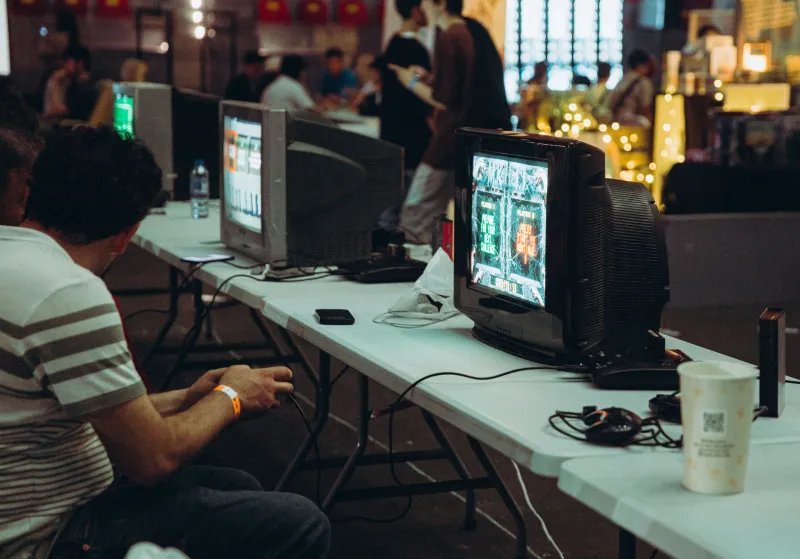
There is a Discord server with 61 members dedicated entirely to speedrunning a 2003 PC game that sold approximately 4,000 copies and received two professional reviews, both negative. The members have a nickname for a specific loading screen that appears between the game's third and fourth levels. They call it "the confessional." There is a reason for this. The reason involves a piece of community lore that would take about twenty minutes to explain to an outsider and makes complete, beautiful sense once you understand it.
This is what happens when a small group of people decides that a forgotten thing deserves to be known.
Beyond the World Record
Speedrunning, for the uninitiated, is the practice of completing a video game as fast as possible, typically through a combination of deep mechanical knowledge, precise execution, and exploitation of glitches or shortcuts the original developers never intended. The big-ticket end of speedrunning is genuinely spectacular — Games Done Quick raises millions for charity, top runners of major titles have actual fanbases, and world records in games like Super Mario 64 or The Legend of Zelda get covered by mainstream gaming outlets.
But the ecosystem underneath that visible layer is where things get genuinely interesting.
For every major title with thousands of runners and a fiercely contested leaderboard, there are hundreds of games with communities of ten, twenty, maybe fifty people. Games that were commercial failures, games that were never released outside specific regions, games that were critically dismissed and quickly forgotten. In some cases, games that were simply too weird or too difficult or too niche to accumulate a mainstream audience even in their original moment.
These small communities don't operate like the big ones. When there are only fifteen people in the world who run a specific game, competition for the record becomes almost secondary to something harder to name — a shared investment in understanding the game completely, from the inside, in a way that nobody else on earth has done.
"There's a point where you know the game better than the people who made it," says a runner who goes by Pellucid and has been running a mid-2000s cult horror game for about four years. "You've found things they didn't know were there. You've mapped the logic of the game in a way that's almost archaeological. At that point it stops being about the clock."
The Lore Emerges
Every small speedrunning community develops its own internal language. This is practically inevitable — when the same small group of people spends thousands of collective hours in the same game, patterns emerge and get named, and the names accumulate into something that starts to feel like folklore.
A specific enemy that reliably causes a useful glitch becomes a character with a backstory. A particularly brutal section of a game that destroys runs right before the finish line gets a name, usually something dark and affectionate. The fastest known route through a game gets called "the path" with a gravity that implies something almost spiritual.
The community around a 1998 edutainment game — yes, edutainment — that a runner named Copperveil has been running for three years has developed an entire cosmology around the game's four playable characters. The characters have canonical relationships within the community that have nothing to do with the actual game. There is an ongoing narrative, updated periodically in a pinned Discord thread, about what the characters are doing "between runs." It is genuinely funny and occasionally moving.
"It started as a bit," Copperveil says. "And then it became a thing. And now it's just part of what the community is. New people join and they learn the lore as part of learning the game. It's inseparable."
Rituals and Superstitions
The ritualistic dimension of small speedrunning communities is harder to explain to an outsider but unmistakable once you see it.
Pellucid starts every run of his horror game by performing the same sequence of inputs before the title screen loads — inputs that have no mechanical effect on the run whatsoever. He started doing it during a particularly bad losing streak two years ago. The losing streak ended. He hasn't stopped since. Three other runners in the community have adopted the same ritual independently.
"I know it doesn't do anything," he says. "Everybody knows it doesn't do anything. We do it anyway. That's kind of the point."
There are games where the community has developed mandatory commentary traditions — specific things you're expected to say out loud at specific moments in a run, regardless of whether you're streaming to anyone. There are games where the fastest known time is deliberately not submitted to the main leaderboard because the community has decided the record belongs to them, not to the broader speedrunning ecosystem.
That last one is rarer, but it exists. The reasoning, when runners try to articulate it, comes back to ownership. A small community that has invested years in a game develops a sense that the game belongs to them in a way that's distinct from the official record-keeping infrastructure. Submitting to the leaderboard means opening up to outside scrutiny, outside optimization, outside runners who might break the record without understanding what the community has built around it.
The Game as Shared Text
What's actually happening in these communities, if you squint at it from a certain angle, is something that looks a lot like what happens around any shared cultural text over time. A book that a small group of readers has lived with for decades. A film that a specific community has watched so many times they can narrate it from memory. The game becomes a reference point, a shared language, a way of knowing who's in the room.
The difference is that speedrunners are also actively transforming the text. Every new glitch discovered, every route optimization, every piece of lore added to the Discord mythology — it's all part of an ongoing collaborative work that has no official author and no fixed version.
"The game I run now is not the game I started running four years ago," Pellucid says. "The mechanics are the same. But the way we understand it, the way we talk about it, the things we've found inside it — that's all different. The community built that."
Sixty-one people on a Discord server, naming a loading screen and calling it the confessional, keeping something alive that the market decided didn't deserve to survive. There's a version of this story where that's just a weird hobby. There's another version where it's exactly what culture is supposed to do.