Garage Gore: The Home-Haunt Builders Turning Suburbia Into October's Best Art Show
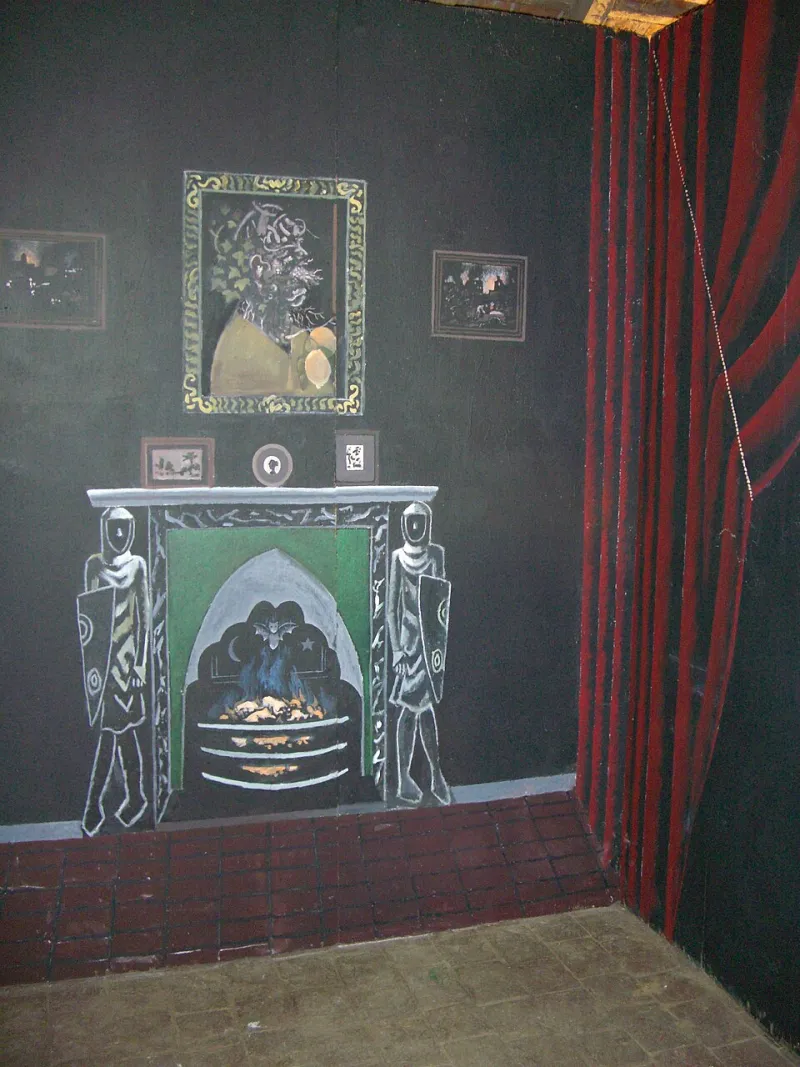
Photo: Lord Mauleverer, CC BY-SA 4.0, via Wikimedia Commons
Let's get the opinion part out of the way early: the best haunted attractions in America are not the $60-a-ticket corporate scream parks with the sponsor logos on the fence. They're the half-acre front yard in a Sacramento cul-de-sac where a retired electrician has spent eleven months building a walk-through haunt that rivals anything a theme park could produce, and admission is a canned good for the local food bank.
The home-haunt scene — the builders, the yard displays, the garage walk-throughs — has quietly become one of the most vital folk art movements in the country, and almost nobody outside it notices until October.
The Builders
Home-haunters come from everywhere. There's the schoolteacher in Missouri whose Victorian facade is built entirely from reclaimed fencing. The husband-and-wife team in Arizona whose animatronic figures have better paint jobs than most commercial props. The legendary builders whose yard haunts draw thousand-person lines and who still answer forum questions from nervous first-timers about wiring fog chiller fans.
The craft is real. These people fabricate their own corpulent tombstones from insulated concrete forms, cast skulls, program light shows, and build pneumatic pop-up mechanisms that would make a theme park engineer nod with respect. The knowledge circulates through dedicated forums and an annual circuit of fall build-season meetups where plans, parts, and — yes — grudges get traded over folding tables.
The grudges are mostly about three things: prop designs getting copied without credit, fog machine etiquette, and the eternal question of whether strobes are a crutch. Ask about any of these at your own risk.
The Economics Are Terrifying, Just Not on Purpose
Here's where the opinion hardens into reporting: the scariest thing in the home-haunt world is not the twelve-foot reaper. It's the receipt.
Pneumatic props — the air-powered figures and jump mechanisms that power most serious haunts — require solenoid valves, regulators, cylinders, and a compressor, and the prices have all climbed hard in the last few years. Builders talk about a single quality prop costing as much as a used car payment, before you've bought the lumber for the facade. Add in fog fluid, lighting, sound gear, and insurance worries, and plenty of haunts run on budgets that would make a small theater blush.
The community's response has been characteristic: share more. Cut files circulate for CNC-carved tombstones. Wiring diagrams get posted openly. Small cottage businesses run by haunters sell cast parts at cost-plus-a-little to keep each other building. When a beloved haunt builder passed away in the Midwest a couple years back, the forums spent weeks finishing his unfinished props so his yard could open one last season.
October Is the Deadline
What makes the scene genuinely moving is the calendar. Every builder works against the same immovable deadline: October 1st, or thereabouts, when the yard opens. There's no extension. No moving the premiere. Which means every September, garages across the country become deadline workshops, with builders hot-gluing at midnight and testing scare timing on brave (or long-suffering) neighbors.
And then, for a few weeks, the neighborhood changes. Kids drag their parents three blocks out of the way. Strangers knock on doors just to say thanks. For the cost of some lumber and a lot of evenings, a suburban street becomes a destination.
The corporate haunts will keep scaling up, and fine — they serve their purpose. But the soul of American Halloween lives in those yards, built by people who will never turn a profit and don't want to. The barrier to entry is a garage, a budget you don't discuss with your spouse, and one good idea for a scare.
If a house on your block goes big this October, tell them it's good. Builders live on that stuff for a whole year.