Basement Theaters and Felt-Lined Dreams: Inside America's Secret Puppetry Circuits
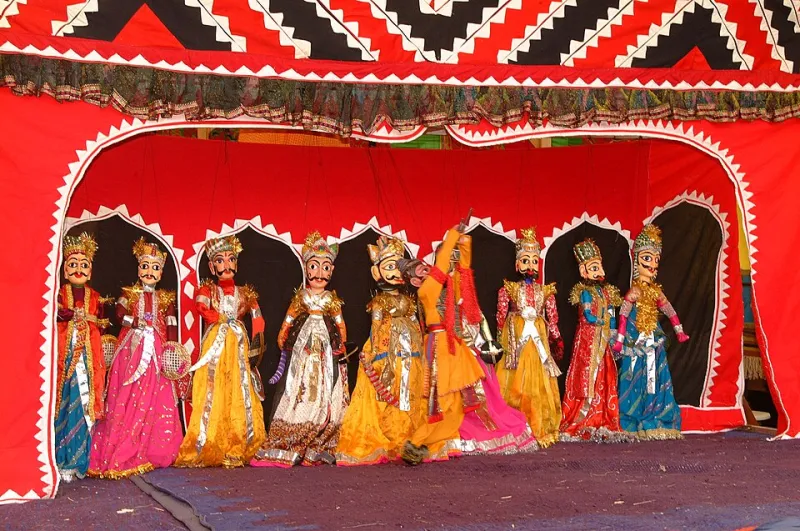
Photo: Smithsonian Institution, No restrictions, via Wikimedia Commons
There's a moment at every regional puppet festival that outsiders never see coming. The lights go down, the audience hushes, and then a twelve-inch felt figure walks out and does something that makes a room full of adults forget they're watching socks on hands.
If you've never been to one, you'd be forgiven for thinking puppetry in America peaked sometime around the last episode of Mister Rogers' Neighborhood. You'd be wrong. There's a loose, scrappy network of troupes and guilds stretching from the Driftless Region of Wisconsin to the Piedmont of North Carolina, and they're keeping one of the oldest performance traditions alive in the least glamorous venues imaginable.
The VFW Hall Is the New Broadway
Ask any puppeteer where the real action is and they won't say Broadway or even the big children's theater circuits. They'll name a VFW hall in rural Ohio, a converted feed store in Texas, a community college black box in Oregon. The National Puppetry Festival rotates through bigger cities, but the beating heart of the scene is the regional gathering — the Great Lakes guild meet, the Southeastern marionette workshop, the Pacific Northwest shadow-puppet jamboree that's been running out of the same grange hall since 1987.
These events run on a shoestring and a potluck. Registration might be forty bucks. The "vendor hall" is a folding table where one guy sells brass rod by the pound and another has hand-carved foam latex heads laid out like produce. Everyone knows everyone, which means everyone also knows who got the coveted Saturday night mainstage slot and who got bumped to the Sunday morning kids' showcase.
Yes, there are grudges. Puppetry is a small world, and small worlds produce big feelings.
Midnight in the Foam Workshop
The culture that surrounds these troupes is its own thing. Because most puppeteers have day jobs — teachers, sign painters, one very committed dental hygienist in Kansas City we heard about — the building happens at night. Drive through any mid-sized American town around 11 p.m. and you're probably passing a garage where someone is airbrushing a felt face or rigging an animatronic eyelid mechanism out of servo motors and prayer.
The craft knowledge gets passed around like a family recipe. There are mailing lists and private forums where builders debate the merits of reticulated foam versus upholstery foam, argue about Antron fleece sourcing now that the good stuff is harder to find, and trade patterns for everything from rod puppets to full body-builts. A well-designed arm rod mechanism can be traced back through three generations of builders like a lineage.
And the work is genuinely sophisticated. A touring marionette piece from one Midwest troupe we caught at a festival had a shipwreck sequence that involved eighteen strings, a water effect made from shredded mylar, and timing so precise the audience gasped. This is not kids' stuff, and every single puppeteer will tell you so, unprompted, usually within the first five minutes of conversation.
The Rivalry Thing Is Real
Every scene has its factions, and puppetry is no different. There are the traditionalists, many trained in the old marionette theater lineage, who think foam-and-fleece television-style building is a dilution of the craft. There are the experimental folks — giant pageant puppets, crankies, shadow work — who think traditionalists are embalming the art form. And there's a growing contingent of young builders who came up through online video and are bringing a scrappy, punk-show energy to the whole thing, booking puppet slams in dive bars and breweries.
The festivals are where all these camps collide, politely but pointedly. Workshop schedules get scrutinized. Adjudication results are discussed for years. One longtime festival organizer described the dynamic as "a church potluck where everyone brought a knife."
But here's the thing: the rivalry is also the engine. Competition for slots and grants and audience attention pushes everyone to build weirder, perform harder, and take bigger swings. The troupes that thrive are the ones that treat a forty-minute show in a 120-seat hall like it's opening night at Lincoln Center.
Why It Persists
There's a practical answer and a romantic one. Practically: puppetry is cheap to start and endlessly deep to master, which makes it one of the last art forms where a person with a hot glue gun and an idea can produce something world-class in their basement. Romantically: a puppet is a small machine for making people believe in something that isn't there, and there will always be an appetite for that.
The scene's biggest challenge isn't apathy — it's continuity. A lot of the master builders are aging out, and their techniques exist mostly in their hands. The guilds know it, which is why mentorship programs and build-along workshops have become the centerpiece of nearly every regional festival.
So if a hand-lettered sign at the county fairground advertises a puppet festival next month, go. Ten bucks gets you a full day of shows, a workshop where a stranger will teach you to sew a perfect fleece seam, and a folding chair in front of some of the strangest, most sincere theater being made in America right now.
The felt doesn't lie.