Cartridge Kids: The Underground Economy of Bootleg ROMs You Can Actually Hold
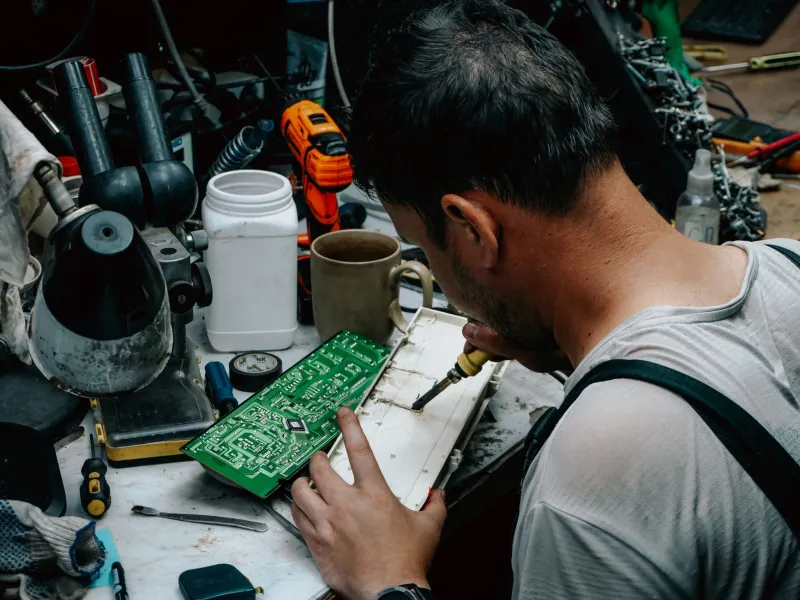
There's a small flat-rate box sitting on a workbench in Columbus, Ohio. Inside it: four Super Nintendo cartridges, hand-labeled with inkjet sticker paper, each containing a game that never officially made it to North American store shelves. The person who built them isn't a pirate in any dramatic sense. They're a 34-year-old database administrator who learned to solder during the pandemic and now spends weekends filling gaps in a collection that the industry has no interest in filling for them.
This is the bootleg cartridge scene, and it's considerably more organized — and more philosophically interesting — than the term "bootleg" tends to suggest.
What's Actually Being Built
The community splits roughly into a few overlapping camps. There are reproduction cart makers, who produce physical copies of games that were never localized or that exist only in ROM dumps. There are flash cart users, who run multi-game hardware like the EverDrive or SD2SNES — devices that let you load ROMs onto a single cartridge via SD card. And then there are the romhackers, who are doing something a little different: taking existing games and modifying them, sometimes superficially, sometimes so thoroughly that the result is basically a new game wearing old clothes.
All three groups share a common technical backbone — the ROM file, the emulator, the EPROM programmer — but their motivations diverge in ways that are worth paying attention to.
The Preservation Argument
The most defensible position in this scene is preservation, and it's not just a rhetorical shield. A lot of what these communities are protecting genuinely doesn't exist anywhere else in playable form. Cartridge batteries die. PCBs corrode. Publishers let licenses lapse and quietly let games disappear. Nintendo's own Virtual Console library — which you might assume would be comprehensive — was famously incomplete, and its successor, Nintendo Switch Online, has moved even further toward curation rather than archiving.
When a game is only available as a $300 loose cartridge on eBay or a ROM someone ripped in 2002, the reproduction community argues that making a physical copy is closer to library science than intellectual property crime. It's a position with real traction. The Video Game History Foundation has been making a version of this argument in legal filings for years, pointing out that a significant percentage of classic games are simply inaccessible through any legitimate means.
The people building these carts aren't blind to the legal gray area. Most of them operate through Discord servers with invite-only access, sell through word of mouth or small Etsy-adjacent storefronts that stay under the radar, and are careful about which titles they reproduce. Reproducing a game that's actively sold on a modern platform is considered bad form in most of these communities — there's a loose but real ethical code.
The Technical Culture Is the Point
Ask anyone deep in this scene what they're actually doing and most of them will eventually get around to talking about the hardware itself. Flash carts are genuinely impressive pieces of engineering. The EverDrive line, made by Ukrainian developer Krikzz, became a kind of community institution — not just because they work, but because the developer has been transparent about the hardware design and responsive to a community that treats these devices as platforms rather than products.
On the reproduction side, the process involves sourcing donor cartridges (often cheap, common titles), desoldering the original chips, burning new EPROMs with the desired ROM data, and reassembling with a new label. It's tedious, requires decent equipment, and produces results that range from indistinguishable from original to obviously janky depending on who's doing it.
The skill transfer is real. People who started making reproduction carts have gone on to develop original homebrew games — entirely new titles designed to run on original hardware. That scene overlaps significantly with the reproduction community and has produced some genuinely remarkable work. Paprium for the Sega Genesis. Battle Kid for the NES. Xeno Crisis. These are new games, sold physically, designed to run on hardware from the late '80s and early '90s. The technical discipline required is substantial.
Corporate Control and the Ownership Question
The deeper tension here isn't really about piracy. It's about who gets to decide what survives.
When Nintendo sends a DMCA notice to a ROM site — as they've done repeatedly and aggressively — they're asserting that ownership of intellectual property means control over preservation. The reproduction community pushes back against that logic in a very physical way: by creating objects that exist outside the reach of a server takedown. A cartridge sitting in a shelf can't be remotely deleted.
There's something almost stubbornly materialist about this response. In an era when game publishers are moving aggressively toward digital-only distribution and subscription access, the people hand-soldering EPROM chips are making a very pointed argument about what ownership should mean. You can't own a license. You can own a cartridge.
That argument doesn't resolve the legal question, and nobody in this scene is particularly naive about that. But it does explain why the community keeps growing even as enforcement gets more sophisticated. The motivation isn't primarily economic — most reproduction carts sell at cost or close to it, and flash carts are a one-time purchase. The motivation is closer to something like stubbornness in the face of institutional indifference.
Where to Find It
If you want to get into this world, the entry points are surprisingly accessible. The EverDrive community has active forums and Discord servers. Subreddits like r/GameCollecting and r/homebrewgaming have regular discussions about reproduction quality and sourcing. For the more technical side, sites like RHDN (ROMhacking.net) have been cataloging hacks and translations for decades.
The reproduction cart market itself is harder to navigate — it moves through personal networks, and quality varies wildly. But if you're patient and willing to ask around, you'll find it.
The scene isn't going anywhere. If anything, it's getting more sophisticated as the tools get cheaper and the community gets better at passing knowledge down. Publishers can keep pulling games off storefronts. The cartridge kids will keep soldering.