Forty-Seven Viewers and a Real Conversation: The Tiny Twitch Channels That Actually Get It
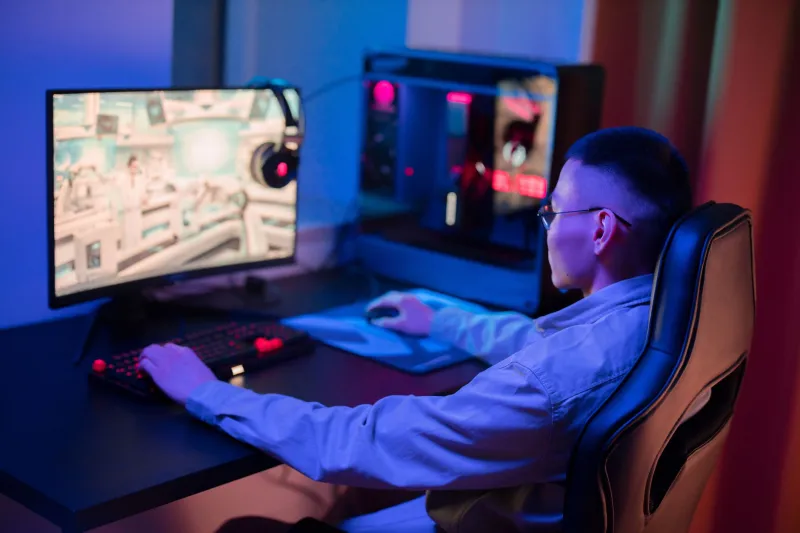
Somewhere in the middle of a Tuesday afternoon, a guy named Derek is streaming a 1987 DOS game to thirty-nine people. He knows most of their usernames. He knows that one of them is watching from a break room in Tulsa. He knows that another just got out of a rough week and showed up because this is the one place online that feels like a living room instead of a stadium.
Derek doesn't have a brand deal. He doesn't have a clip that went viral. He has thirty-nine people who actually showed up.
This is the part of Twitch that the platform's own marketing department would never bother to advertise — a sprawling, mostly invisible ecosystem of streamers who've quietly decided that growth isn't the goal. Not because they gave up, but because they looked at what "making it" actually looks like and said, sincerely, no thanks.
The Myth of the Ladder
Twitch was designed with a pretty clear implied promise: grind long enough, build smart enough, and you climb. The platform's entire affiliate and partner tier system reinforces the idea that small is a temporary condition on the way to something bigger. Every dashboard metric — peak viewers, follower growth, hours watched — nudges streamers toward treating their channels like startups.
But somewhere along the way, a specific kind of streamer started ignoring all of that.
Call them micro-streamers, intentional small-timers, whatever label fits. They're running channels that hover anywhere from a dozen to maybe a hundred concurrent viewers, and they've structured their entire streaming lives around the fact that a smaller room is actually easier to fill with something real. The chat moves slow enough to read. The regulars become, genuinely, regulars. The streamer learns your name because there are few enough names to learn.
It sounds almost aggressively simple. And yet it's producing something that the platform's top tier — the streamers pulling 20,000 viewers a night — almost structurally cannot replicate.
What Happens When Chat Is Slow Enough to Read
Ask anyone who's spent time in a massive Twitch stream and they'll describe the chat the same way: a wall of noise. Emotes scrolling faster than words. Inside jokes layered on top of inside jokes. The streamer calling out usernames at random, like a lottery. The audience is enormous and almost entirely anonymous to itself.
Now go find a stream with sixty viewers covering, say, vintage synthesizer repair. Or competitive Minesweeper. Or someone playing through every licensed game ever released for the Sega CD in chronological order.
The chat is different. People are finishing each other's sentences. There's an ongoing joke from three weeks ago that everyone remembers. Someone asks a technical question and three other viewers answer before the streamer does. There's a whole social fabric happening that has almost nothing to do with the content on screen — the game or the hobby is more like a campfire that everyone's sitting around.
Psychologists have a term for the upper limit of meaningful social relationships — Dunbar's number, roughly 150 people — and there's something interesting happening when you look at micro-streaming communities through that lens. These channels are operating well inside the range where humans are actually wired to maintain real social bonds. The intimacy isn't a bug. It's the whole product.
The Economics of Choosing Small
Here's the part that surprises most people: a lot of these streamers aren't doing badly, financially speaking. They're just doing it differently.
A channel with 60 loyal viewers and a Patreon or subscription base of 40 people paying $5 a month is clearing $200 before platform cuts — not quit-your-day-job money, but real supplemental income built on an audience that actually cares. Compare that to a mid-tier streamer grinding for 500 average viewers with a fraction of that conversion rate, burning hours into content optimization and social media cross-promotion, and the math starts to look less embarrassing for the small-timer.
Some of the most sustainable micro-streamers have essentially built subscription models that mirror what newsletter writers and indie podcasters figured out years ago: a small, devoted audience that pays consistently beats a large, indifferent one every time. They're not chasing the algorithm. They're building something closer to a membership.
The overhead is also just lower. No editor. No clip farm. No team. Just a person, a setup, and a channel that exists on their own terms.
Niche as a Feature, Not a Flaw
The content that tends to anchor these communities is almost aggressively specific. There are streamers dedicated entirely to obscure regional video game releases that never made it stateside. Channels where someone repairs vintage electronics on camera while chatting about the history of consumer tech. Streams built around hyperlocal music scenes, tabletop RPG systems with three sourcebooks, competitive play in games whose online servers are technically still running but down to maybe 200 active players worldwide.
This specificity is doing real work. It's a filter. If you find a stream about, say, cataloging every unlicensed NES cartridge ever manufactured, you already know something meaningful about everyone else in that chat. The content self-selects for people who are going to get along, who share a reference point, who already speak a version of the same language.
Mainstream streamers can't do this. When your audience is 15,000 people watching you play whatever game just dropped, the shared context is thin. The community, if it forms at all, has to build itself around parasocial attachment to the streamer rather than any genuine common interest among viewers. That's a fundamentally different relationship.
The Streamers Who Turned Off the Growth Dashboard
Talk to people running these channels and you'll hear a version of the same story. They tried to grow. They watched the tutorials, posted the clips, networked in the right Discord servers. And somewhere in the middle of all that, they noticed that the channel stopped feeling like theirs.
One streamer who covers obscure Japanese PC-98 games described it as "optimizing the fun out of it." Another, who runs a channel dedicated to competitive play in a mid-2000s RTS game with maybe 300 active online players left, said he made peace with small when he realized his chat was more engaged than anything he'd seen on channels ten times his size. He stopped checking his follower count. He started remembering everyone's timezone.
There's a word that comes up constantly in these conversations: intentional. These aren't people who stumbled into smallness. They made a choice, and it changed what streaming meant to them.
What the Rest of the Platform Could Learn
Twitch as a company is not particularly interested in its micro-streamer population. The platform's discovery tools are notoriously bad for small channels, and its monetization thresholds are designed around scale. Finding these streams often requires word of mouth, Reddit threads, or stumbling through a very specific corner of the platform at the right time.
But the culture being built inside these tiny channels is quietly proving something that the content industry keeps forgetting: people don't actually want more content. They want better belonging. They want to be known, even a little bit, by the people they're spending time with online.
Derek and his thirty-nine viewers figured that out. The question is whether the platform that hosts them will ever catch on.
Probably not. And honestly? That might be exactly what keeps these communities working.