Quarters and Company: Why the Neighborhood Arcade Became the Hangout the Internet Never Could
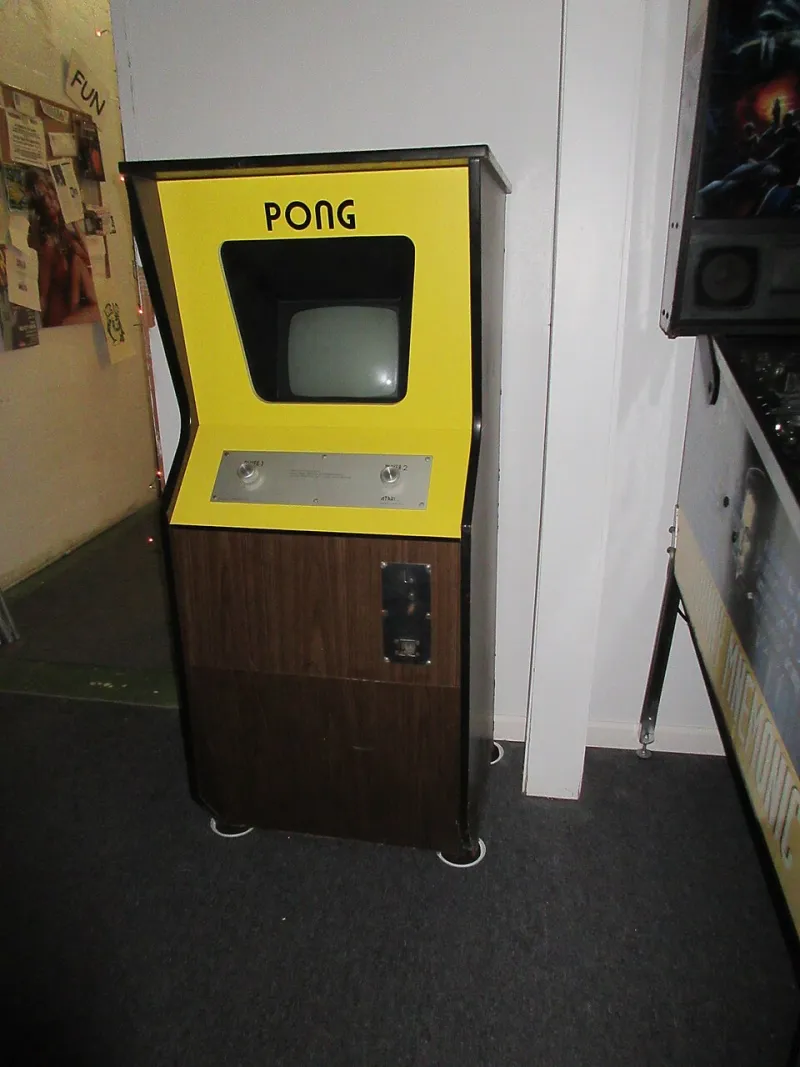
Photo: Infrogmation of New Orleans, CC BY 2.0, via Wikimedia Commons
Walk into a good neighborhood arcade on a Friday night and you'll notice something that feels slightly out of time. People are talking to strangers. Not in the forced, app-mediated way of a networking event, but the natural, incidental way that happens when you're both watching someone destroy a high score on Galaga or arguing about whether Street Fighter II or Street Fighter III is the better game. It's loud and a little chaotic and nobody is looking at their phone.
This is the thing that's hard to explain to someone who hasn't experienced it: the arcade is one of the few spaces left in American life where genuine, unplanned social interaction just happens. And people, it turns out, are hungry for that.
The Third Place Problem
Sociologists have a term for the spaces between home and work where community actually forms — they call them "third places." Barbershops, diners, bowling alleys, record stores. The list of places that used to fill this role in American neighborhoods and no longer do is long and depressing. Chains replaced independents, online shopping hollowed out retail, and the pandemic finished off whatever was left of some of these spaces.
The arcade, which seemed like a casualty of the home console revolution back in the '90s, has quietly staged a comeback as one of the most functional third places still operating. The format turns out to be almost uniquely suited to creating the kind of low-stakes social environment that people are starved for.
You don't have to talk to anyone. But you probably will.
The Barcade Evolution
The barcade model — combining a full bar with a curated selection of classic and modern arcade games, usually in a free-play format — has been around since the early 2000s, but it's expanded aggressively in the last decade. There are now barcades in virtually every mid-sized American city, and the format has proven remarkably durable.
Part of the reason is demographic flexibility. A barcade can serve a 22-year-old on a first date, a 45-year-old who grew up on these games, and a 35-year-old bringing their kid on a Saturday afternoon. The shared activity of playing games creates an equalizer that a bar or restaurant alone can't replicate.
But the more interesting development is the non-barcade arcade — family-friendly or all-ages spaces that are thriving without the alcohol component. These tend to draw tighter, more community-focused crowds and often become neighborhood institutions in a way that bars rarely do.
The Operators Keeping It Running
Running an arcade in 2024 is not a casual undertaking. Vintage machines break constantly and require specialized knowledge to repair. Parts are scarce. Modern arcade hardware from companies like Raw Thrills or Bandai Namco is expensive to license. The economics require a genuine love of the thing.
Dave Kowalski has operated a small arcade in Akron, Ohio for six years. He started with twelve machines in a rented storefront and now has 40 games in a space that hosts tournaments, birthday parties, and a monthly retro gaming night that regularly sells out. He does most of the machine repair himself.
"I have a waiting list of people who want to donate machines to me," he says, laughing. "The problem isn't finding games. It's finding space and keeping everything running. A 1981 Pac-Man cabinet is 43 years old. It needs attention."
Kowalski's arcade operates on a token system rather than free play, which he says actually enhances the social dynamic. "When you're counting tokens, you're more deliberate about what you play. You watch other people play while you're deciding. That's where the conversations start."
Competition as Community
One of the most underrated aspects of the arcade revival is competitive play. Not the esports-stadium version with sponsorships and streaming deals, but the local, informal competition that happens when a leaderboard gets posted on a cabinet and regulars start gunning for it.
This kind of competition is intensely community-forming. It creates ongoing narratives — the person who's held the Donkey Kong record for eight months, the newcomer who's getting suspiciously close — that give regulars a reason to keep coming back and something to talk about when they do.
Several arcades have formalized this with organized tournaments, and the turnout at these events tends to be remarkable. A Street Fighter tournament at a Chicago barcade last year drew 200 participants. A Pinball League operating out of a bar in Nashville has 80 regular members and a waiting list. These numbers represent real community infrastructure, built around a physical space and a shared activity.
The Spaces Nobody Expected to Matter
There's a specific kind of arcade that's emerged in recent years that deserves its own recognition: the niche specialty space. Pinball-focused arcades. Arcades built around Japanese imports. Spaces dedicated entirely to beat-em-ups or fighting games. These hyper-focused venues tend to draw extremely dedicated communities of people who share a very specific obsession.
The Pacific Pinball Museum in Alameda, California is a well-known example, but smaller versions exist in cities across the country — often operating quietly, known mainly through word of mouth and the kind of recommendation you get from someone who's clearly excited to tell you about it.
These spaces tend to punch above their weight in terms of community impact. A 20-machine pinball bar in a mid-sized city might be a central organizing institution for that city's entire pinball community — the place where the league meets, where visiting players stop in, where local tournaments are held.
What the Algorithm Can't Replicate
Online gaming is genuinely great at a lot of things. The scale of connection it enables is real. But it's terrible at the specific thing that makes arcades work: the incidental, physical, unmediated presence of other people who share your interest.
You can't high-five someone through Discord. You can't watch a stranger's face when they finally crack a high score they've been chasing for weeks. You can't have the conversation that starts because you were both standing in front of the same machine at the same time.
The arcade figured this out decades ago and then got temporarily sidelined by technology that promised to do everything better. Turns out it couldn't do this particular thing at all. And people are remembering that, one quarter at a time.